


Chancellorsville
Lee’s Finest Hour
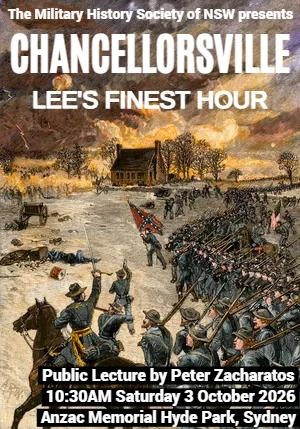 In the spring of 1863, the American Civil War stood at a crossroads. The Union Army of the Potomac possessed overwhelming strength, renewed confidence and a new commander determined to deliver a decisive blow. Opposing them was Robert E. Lee’s Army of Northern Virginia, outnumbered and undersupplied, but led by a general whose reputation had been forged through boldness and calculated risk.
What followed was a campaign defined by uncertainty, rapid manoeuvre and high-stakes decision-making. Fought amid the dark, tangled and treacherous terrain of the Wilderness of Virginia, Chancellorsville forced commanders to act with imperfect information and little room for error. It became a contest not only between armies, but between personalities, leadership styles and competing visions of how the war should be fought.
This presentation explores the strategic background to the campaign, the commanders who shaped its course, and the challenges posed by the unforgiving Wilderness. Above all, it examines why Chancellorsville remains one of the most fascinating and debated battles of the American Civil War.
About the Author
 Peter Zacharatos is an economic policy professional at the Australian Treasury and an Australian lawyer. He holds degrees in Law and Political Science from the University of Technology Sydney and combines a professional interest in policy and geopolitics with a lifelong passion for history.
A member of the American Civil War Round Table of New South Wales since the age of 14, Peter has spent many years studying military history, leadership and strategy. His presentations to the Round Table have covered subjects ranging from the campaigns of the American Civil War (such as Second Manassas, Fort Donelson and the Battle of Brice’s Crossroads), to the constitutional and legal questions arising from the conflict.
Outside his professional career, Peter is an enthusiastic traveller who enjoys visiting historic battlefields and exploring the campaigns, leaders and decisions that shaped the course of history.
Lecture Time & Venue
Saturday, 3 October 2026, 10:30AM-12:30PM, Auditorium, Anzac Memorial Hyde Park, corner Elizabeth and Liverpool Streets, Sydney CBD. Admission is free of charge but a donation would be appreciated. For further information call 0419 698 783 or email: president@militaryhistorynsw.com.au.
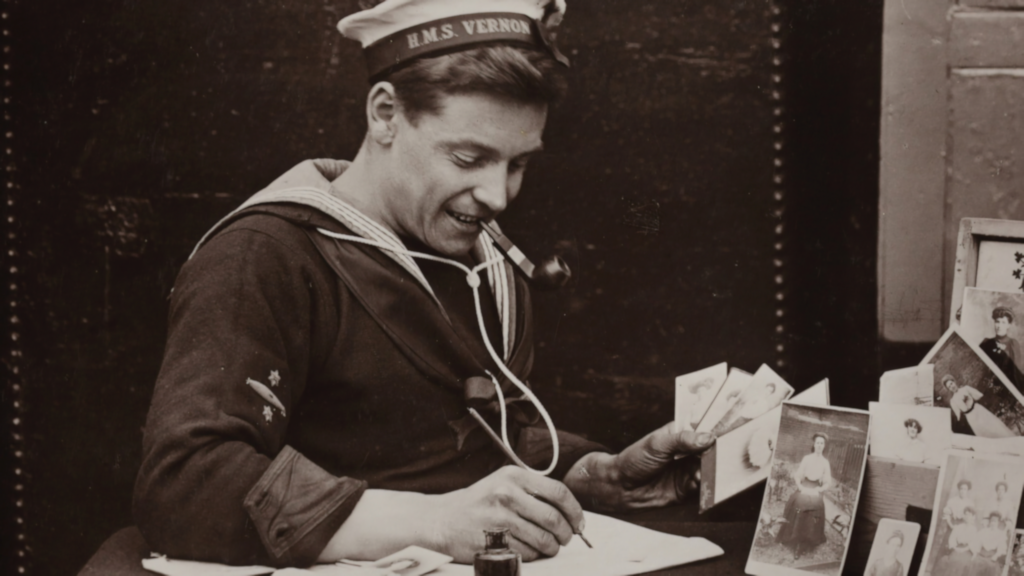
Our Venue – Anzac Memorial Hyde Park
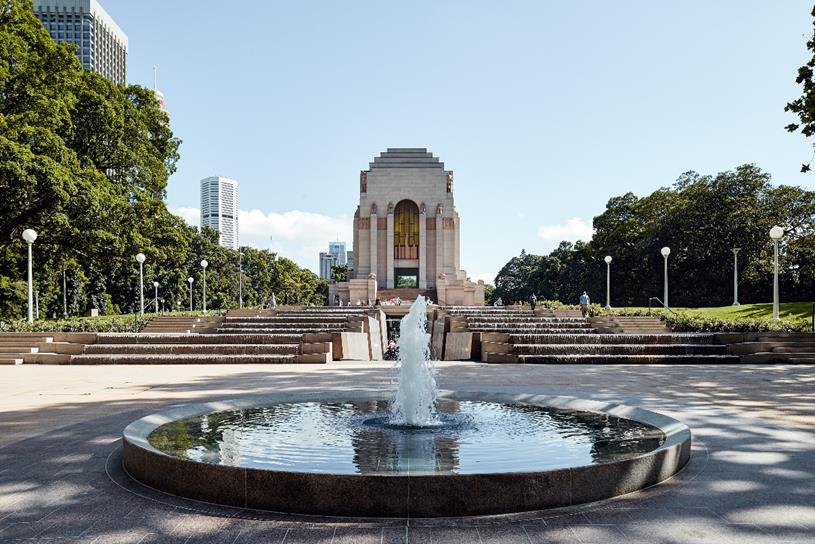
The current venue for The Military History Society of New South Wales lecture program will be the Auditorium at the Anzac Memorial Hyde Park, corner of Elizabeth and Liverpool Streets, Sydney CBD. Numerous bus services stop at the location and Museum railway station is only 160 metres away. The venue will be opening its doors at around 10:00AM.
Our Recent Lectures
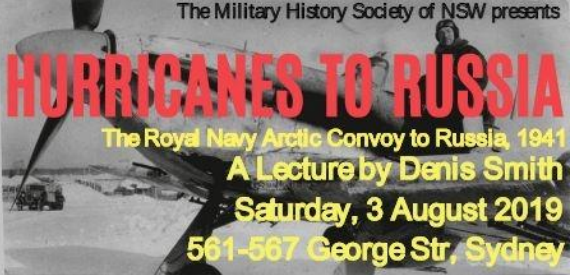
Hurricanes to Russia By Denis Smith
Denis Smith's talk tells the largely unknown story of HMS Argus, the aircraft carrier which transported 24 RAF Hurricane fighter planes to Russia in 1941.
Breakout from Normandy By Robert Muscat
This lecture is the Society’s contribution to 75th anniversary commemorations of D-Day. By end June 1944 the word most feared by Allied senior commanders and politicians was “stalemate”. US First Army and British Second Army units made few inroads into Normandy since the D-Day landings on 6 June.
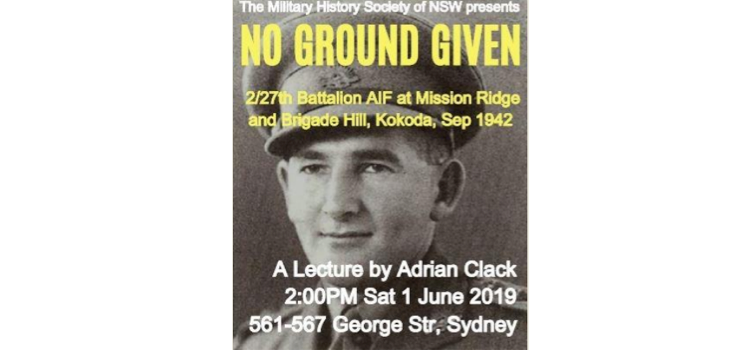
No Ground Given, 2/27th Battalion AID at Mission Ridge and Brigade Hill, Kokoda, By Adrian Clack
At the battles of Mission Ridge and Brigade Hill, 7-8 September 1942, in the legendary Kokoda Trail Campaign, three sister battalions of the AIF were together for the first time.
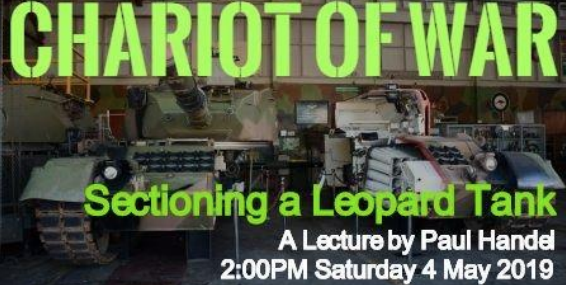
Sectioning a Leopard Tank By Paul Handel
Over three decades from 1976 to 2007 the Leopard 1 Tank was the work horse of the Australian Army’s 1st Armoured Regiment. In 2015 the Australian Army History Unit (AAHU) received support for a project to section or “cut-in-half” a Leopard Tank so that students in armoured vehicle courses could see the interior of a main battle tank.
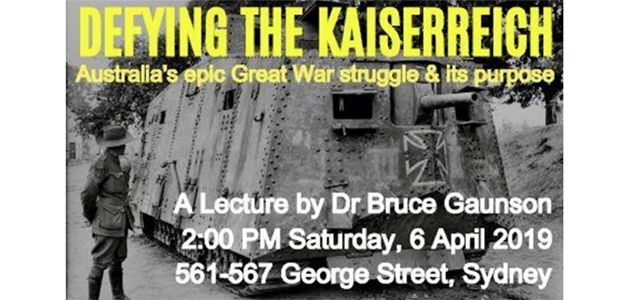
Defying the Kaiserreich by Bruce Gaunson
Did Australia have reason to fear Germany’s Pacific power? Most definitely yes argues Dr Bruce Gaunson, having examined the views of competent analysts at the time and dramatic evidence from the Kaiserreich’s records supporting those pre-1914 analysts.
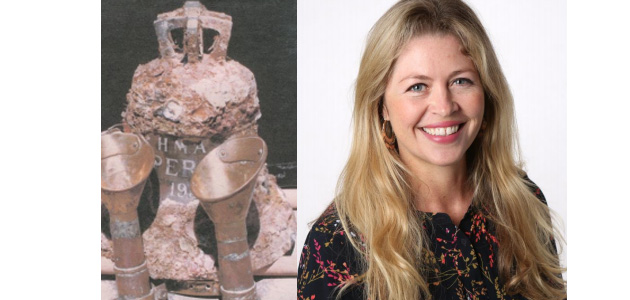
Sunk Warships, 1942: HMAS Perth & USS Houston By Natali Pearson
The lightening advance of Japanese forces south to the Netherlands East Indies (Indonesia) in March 1942 spelt doom for two proud warships of the Allied navies.